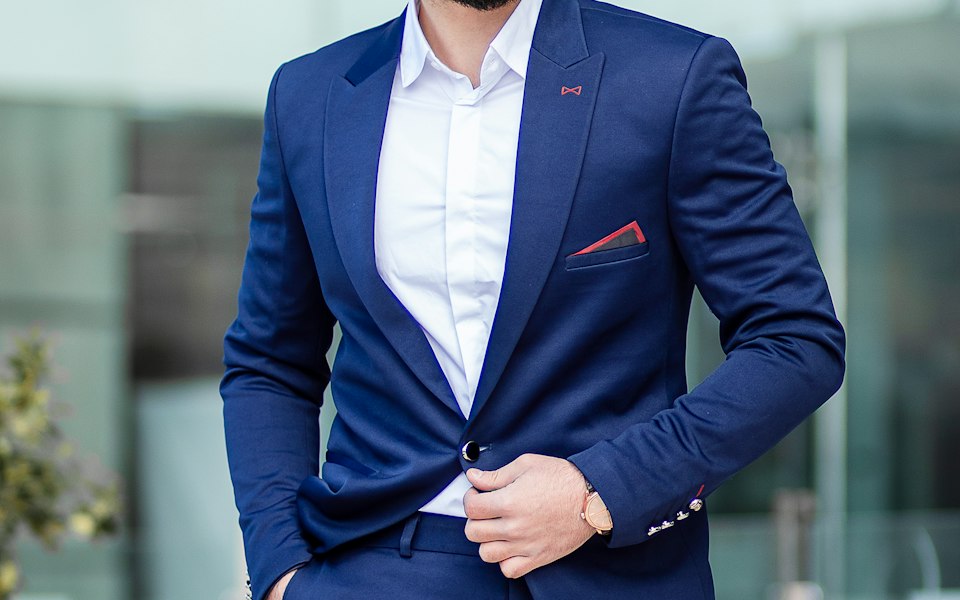
A well-fitted suit remains the most powerful garment in menswear. It straightens your posture, frames your chest, and commands immediate respect in any room. However, the world of formal tailoring can be intimidating, filled with sartorial jargon like canvas construction, drop measurements, and gorge heights.
This guide strips away the pretense to give you the practical knowledge you need when investing in suits, dress shirts, and formal black-tie attire.
1. Anatomy of a Great Suit: What to Inspect Before Buying
Half-Canvas vs. Full-Canvas vs. Fused
- Fused: Glued interfacing inside the chest. Cheaper, but can bubble after dry cleaning and feels stiff against the body.
- Half-Canvas: Features floating horsehair canvas through the lapel and chest with fused lower body. The gold standard for value and longevity.
- Full-Canvas: The canvas extends through the entire jacket front, molding to your body heat over time like fine leather.
Shoulder Construction
- Roped Shoulder (British): Features a structured roll at the sleevehead for a commanding, military-inspired silhouette.
- Spalla Camicia (Neapolitan): Shirred, shirt-like shoulder with minimal padding that drapes naturally over your frame.
2. Choosing the Right Suit Fabric and Weight
Unless you live in extreme climates, focus on all-season worsted wool weighing between 260 and 310 grams per square meter (9 to 11 oz). Worsted wool resists wrinkles, breathes well, and holds a sharp trouser crease through long days of travel and meetings.
- Suit #1: Solid Charcoal Grey Two-Button Suit.
- Suit #2: Deep Midnight Navy Two-Button Suit.
- Suit #3: Subtle Glen Plaid or Prince of Wales Check for sartorial depth.
3. Dress Shirt Proportions and Collar Geometry
Your dress shirt collar should complement your face shape and tie knot:
- Semi-Spread Collar: The universal choice that flatters almost every face and accommodates medium four-in-hand and half-Windsor knots.
- Cutaway Collar: Wide spread that emphasizes collarbones and pairs best with wide lapels.
- Sleeve Length: Aim for exactly one-quarter to one-half inch of shirt cuff visible beyond your jacket sleeve when your arms hang naturally at your sides.
4. Black-Tie Etiquette: The Rules That Matter
When an invitation specifies “Black Tie,” honour the tradition:
- A black or midnight blue tuxedo with silk grosgrain or satin facings on the lapel.
- Peak lapels or a classic shawl collar (avoid notch lapels on dinner jackets).
- A self-tied silk bow tie matching the lapel facing.
- Patent leather oxfords or polished black calfskin wholecuts.
True formal style is not about ostentation; it is about precision, proportion, and quiet mastery of the rules.